
about Us
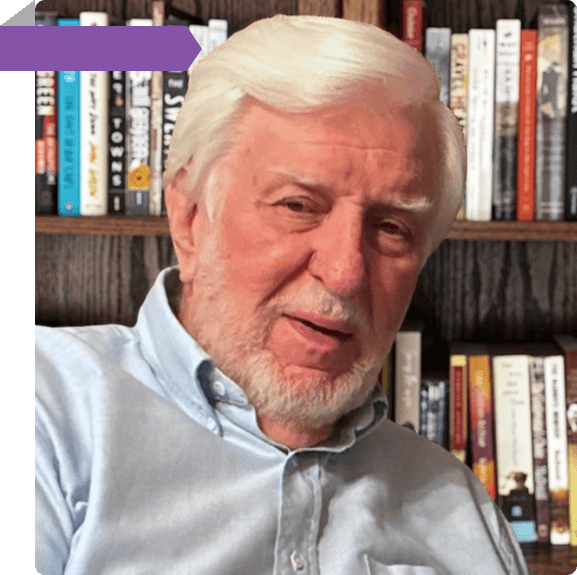
Dale M. Jackson
Hello, I'm Dale M. Jackson.
I am a retired college professor whose graduate studies focused primarily on communication, with a minor in counseling. For decades, my academic research explored the role of empathy in effective listening. The subject became the foundation of my doctoral dissertation and later shaped much of my teaching, including a college course devoted entirely to empathic listening.
Over the years, I have seen how deeply people long to be understood and how often they are misunderstood instead. While much of the research on empathy comes from professional counseling fields, I have written this book for everyday people: friends, parents, spouses, teachers, and anyone who wants to offer genuine care without pretending to be a therapist.
Empathic listening is not about sounding compassionate or appearing helpful. It is about becoming a person who truly understands. My hope is that the principles shared here will help readers build stronger relationships and create environments where people feel safe, respected, and valued.
HOW THE BOOK AND I GOT HERE: MY ACADEMIC JOURNEY
Dale M Jackson, PhD
April 2026
My first thoughts of college occurred when I was fourteen years old. I don’t know where the idea came from. No one in my family had gone to college. (I was the youngest of five). My parents hadn’t finished high school. We lived in western Pennsylvania, south of Pittsburgh, and Dad worked in a steel mill.
On the drive home from a visit with relatives in Philadelphia, I asked Dad if we could drive through State College, home of Penn State University. I was awed by the campus, and I remember saying to my parents I would like to attend a place like this someday. As it turned out, I did attend and became a part of several places like that. It became my life’s work.
After two years of study at Asbury University, I had to declare a major, so I chose communication because that was where I was getting my best grades. Might as well major in success. I had no idea what I would do with this major. Even after graduation, I still didn’t know. A summer at Asbury Seminary convinced me that I didn’t want to become a minister. Business courses at nearby University of Kentucky convinced me that I didn’t want to be a businessman.
Meanwhile, a few successful teaching experiences made me wonder if this might be it. I seemed comfortable and capable in a classroom. I returned to the college, met the requirements for certification as a high school Speech and English teacher and accepted a teaching position in a small town in northern Kentucky. By now Margaret and I had been married for three years, and our first son arrived five months before we moved to Carrollton, Kentucky.
I enjoyed two years of high school teaching but dreamed of teaching older students in college. I had no idea how that could happen. We heard that my major professor at Asbury had moved to Taylor University in Upland, Indiana, three hours north of Carrollton.
I knew little about Taylor and had never been there. We called the professor and arranged a visit. She showed me around the campus and introduced me to a few people. I was not aware that I was interviewing for a job. Two weeks after that visit, I got a call from the Dean of the University asking if I would be interested in a teaching position. Ahh . . . Yes! The condition was that I would start graduate studies immediately.
Ball State University (named after the founders, the Ball brothers) is located in Muncie, Indiana, thirty minutes south of Taylor. I started graduate studies there as soon as we moved to Upland. Our second son was due any day, so our first goal was to find the quickest way to the nearest hospital.
At first, my rank was Instructor, not professor. At graduation that first year, I discovered that the faculty, in full robes, marched by rank and I was dead last. The second year the faculty was arranged by departments, so I was no longer last. A decade later I was a full Professor and Chairman of the Communication Arts Department. After my fourth year of teaching, I received the Professor of the Year award. I thought there must have been a mistake.
My first courses were public speaking, interpersonal communication and a few advanced courses including Argumentation and Debate. I was the only one in the department who had debate experience, so the debate course became mine.
At Asbury I had taken a debate course and was part of a team that participated in some debate tournaments around the area. At Taylor I was encouraged to start a debate team and for a couple of years they compiled a winning record in some highly competitive tournaments at some large, prestigious universities in the Midwest. It helped that several of the team members had debated in high school.
The following fall I advertised a meeting for anyone interested in becoming a debater. Maybe twenty people showed up. I explained how debate works, the useful skills that can be learned, and the amount of work it takes to prepare. No one came to the second meeting.
I finished a Master’s Degree in Communication in two years while teaching and began planning the next step. I knew that a doctorate was required if I wanted to continue college teaching, so I visited Indiana University, Bloomington, and was accepted in their PhD program. With an enrollment well over thirty thousand students at the time, IU fulfilled my Penn State wish.
One of the requirements of the graduate school was a year of residency on campus, so after several summers of taking classes, we moved to Bloomington for fifteen months and lived in campus housing. There were over two hundred families from all over the world living in our building.
Our sons (second grade and kindergarten) walked to a university elementary school nearby and had playmates from a wide variety of cultures. This was an enriching cultural experience for us all. I taught two communication courses each semester for modest pay and the waiver of all fees.
As part of the emphasis on research in the PhD program, a reading knowledge of two foreign languages was required. I got through two Spanish reading classes okay because Margaret was a Spanish teacher. French was more of a challenge. But in the middle of the French courses, the requirement was changed to one foreign language, so I dropped French.
After qualifying exams, the final requirement was original research and writing the dissertation. The department allowed me to continue my empathy interest and focus on empathic listening. This became a foundation for the book.
Early in my teaching career I became fascinated with the concept of empathy: what it is (and isn’t), why some people seem to do it naturally, how it can be taught and learned, and how it improves listening habits.
As I researched the subject, I began to see positive changes in my own behavior. I was becoming a better husband, father and teacher. I began to integrate some of the content into my interpersonal communication classes. Students responded positively. Later I was able to design a course in empathic listening for the January short term. Enrollment was limited to twelve to make practice sessions manageable. Student evaluations were overwhelmingly positive--many claimed it was “life changing.”
In graduate school I had a minor in the Counseling Department so I could learn how to teach empathic listening skills. One course included video-taped practice sessions with the professor and other students observing. A volunteer talked about a personal problem, and we demonstrated our listening skills.
After fifteen minutes, the video was replayed and the group discussed how well we listened. I thought I could do this easily, but my first attempt was a disaster. Instead of responding to her meanings and feelings, I tried to solve her problem. I became a ‘fixer.” I was devastated. My second try was much better.
When I retired from teaching, I put all my empathy material into a filing cabinet drawer—research and lecture notes, handouts, assignments and student evaluations. The thought was, “There is a book here that needs to be written.” In January 2025, I opened the drawer.
I wanted a book I would like to read. The goal was a clear, informal, easy-to-read book written for non-counselors, lay people who would not be interested in heavy, academic psychological and counseling literature. The result: When Understanding is Enough: Guidelines for Empathic Listening.
our vision
In a culture quick to judge advise and correct we envision homes workplaces and communities shaped by careful listening and thoughtful response. When people feel understood frustration softens hope returns and relationships deepen.
Our vision is simple: to equip ordinary individuals with the ability to offer extraordinary understanding. If more people practiced empathic listening, conflicts would be handled with greater care, pain would be met with compassion rather than clichés, and conversations would become spaces of healing rather than debate.
Understanding by itself is powerful. Often, it is enough.
our vision
In a culture quick to judge, advise, and correct, we envision homes, workplaces, and communities shaped by careful listening and thoughtful response. When people feel understood, frustration softens, hope returns, and relationships deepen.
Our vision is simple: to equip ordinary individuals with the ability to offer extraordinary understanding. If more people practiced empathic listening, conflicts would be handled with greater care, pain would be met with compassion rather than clichés, and conversations would become spaces of healing rather than debate.
Understanding by itself is powerful. Often, it is enough.
our vision
In a culture quick to judge, advise, and correct, we envision homes, workplaces, and communities shaped by careful listening and thoughtful response. When people feel understood, frustration softens, hope returns, and relationships deepen.
Our vision is simple: to equip ordinary individuals with the ability to offer extraordinary understanding. If more people practiced empathic listening, conflicts would be handled with greater care, pain would be met with compassion rather than clichés, and conversations would become spaces of healing rather than debate.
Understanding, by itself, is powerful. Sometimes, it is enough.